動力雕塑:從機械繪畫到身體表演
Level: Primary and Lower Secondary Education
Medium: Kinetic Sculpture, Drawing Machines, and Physical Performance
Interdisciplinary Collaboration: Physics and Art History
In this series of teaching experiments, I brought together Surrealist automatic drawing, kinetic sculpture, and principles of physics to explore the creative possibilities of mechanical movement and chance. Through observing Surrealist artworks and movements inspired by nature, participants experimented with translating different forms of motion into mechanical structures, discovering how art and science could come together through creative experimentation.
Participants constructed their own drawing machines using wooden boards, motors, and elastic bands, adjusting tension, weight, and movement to observe the lines and patterns produced by mechanical motion. Finally, I invited participants to translate the dots, lines, and rhythms generated by their machines into bodily movements. Through collective performance, they recreated the movements of their drawing machines, extending their creative exploration from two-dimensional drawings into three-dimensional space and physical interaction.
教學對象: 國小與國中
創作媒材: 動力雕塑、自動繪畫機械、身體表演
跨領域合作: 物理與藝術史
在這一系列教學實驗中,我結合超現實主義的自動繪畫、動力雕塑與物理原理,引導參與者探索機械運動所產生的偶然性與創作可能。透過觀察超現實主義藝術作品及自然界的仿生運動,參與者嘗試將不同的運動方式轉化為機械結構,體驗藝術與科學結合的創作過程。
課程中,參與者運用木板、馬達與橡皮筋製作自動繪畫機械,透過調整張力、重量與運動方式,觀察機械所生成的線條與圖像。最後,我邀請參與者將機械繪畫中的點、線與運動節奏轉化為身體動作,透過集體表演重新演繹機械的運動軌跡,讓創作從平面的繪畫延伸至立體空間與身體互動。
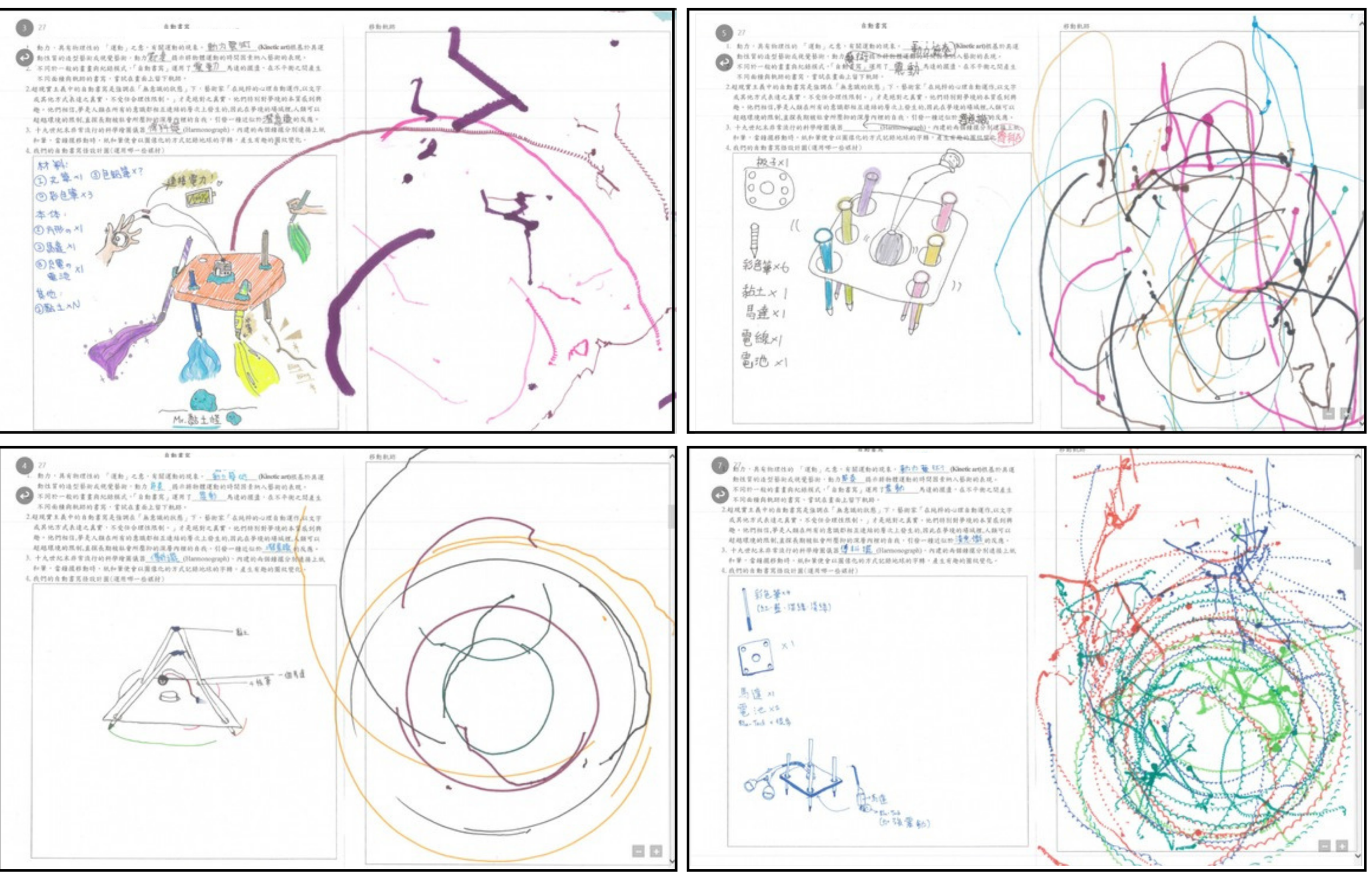
Note. Participants planned their drawing machines by selecting materials and sketching mechanical structures. The right side of each worksheet records the lines and patterns produced by their completed machines, revealing the relationship between initial designs and experimental outcomes.
註。 參與者透過選擇材料與繪製結構草圖,構思自動繪畫機械的設計。學習單右側則記錄機械完成後所生成的線條與圖像,呈現從設計構想到實際實驗的創作歷程。
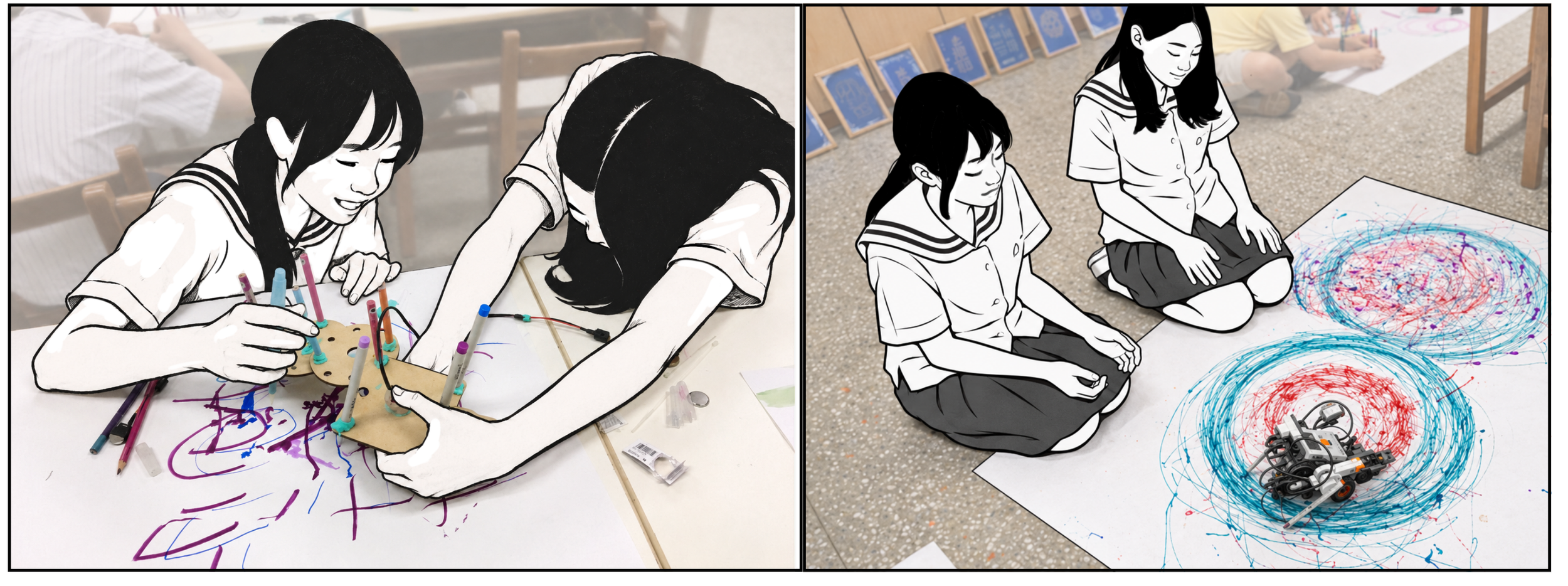
Note. Participants assembled and tested their drawing machines in different settings. Left: A tabletop drawing machine was constructed and adjusted through hands-on experimentation. Right: A floor-based drawing machine generated colourful circular patterns across a large sheet of paper.
註。 參與者組裝並測試不同形式的自動繪畫機械。左圖: 在桌面上製作與調整繪畫機械,探索其運動方式。右圖: 地面上的自動繪畫機械在大型紙張上留下彩色的環狀線條。
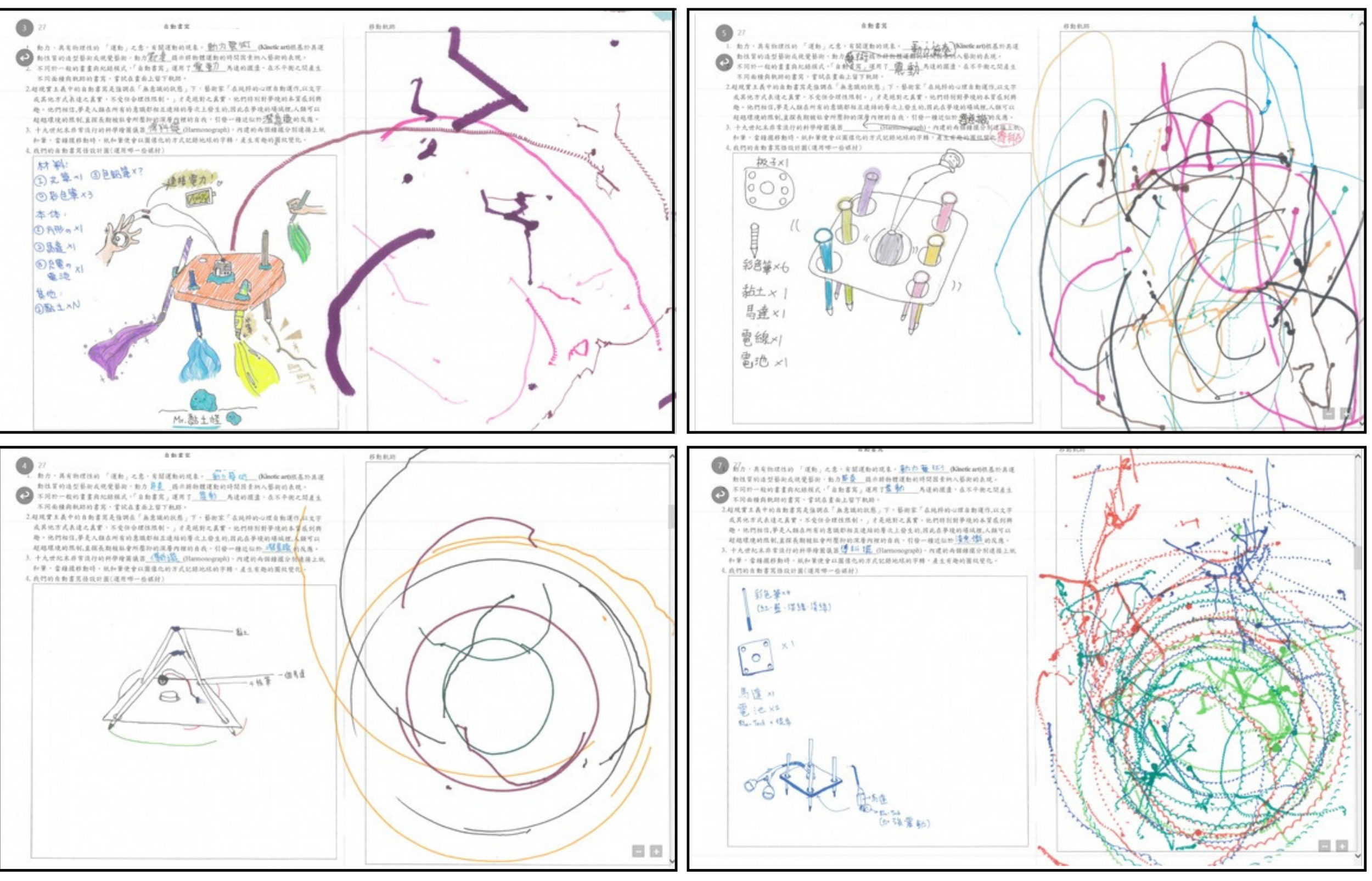
Note. Different drawing machines produced distinctive visual traces through mechanical movement. Variations in structure, motion, and the positioning of drawing tools generated circular, linear, and irregular patterns, revealing the unpredictable qualities of automatic drawing.
註。 不同結構的自動繪畫機械透過運動留下各具特色的線條軌跡。機械構造、移動方式與畫筆位置的差異,形成環狀、直線與不規則圖像,呈現自動繪畫過程中的偶然性與視覺變化。
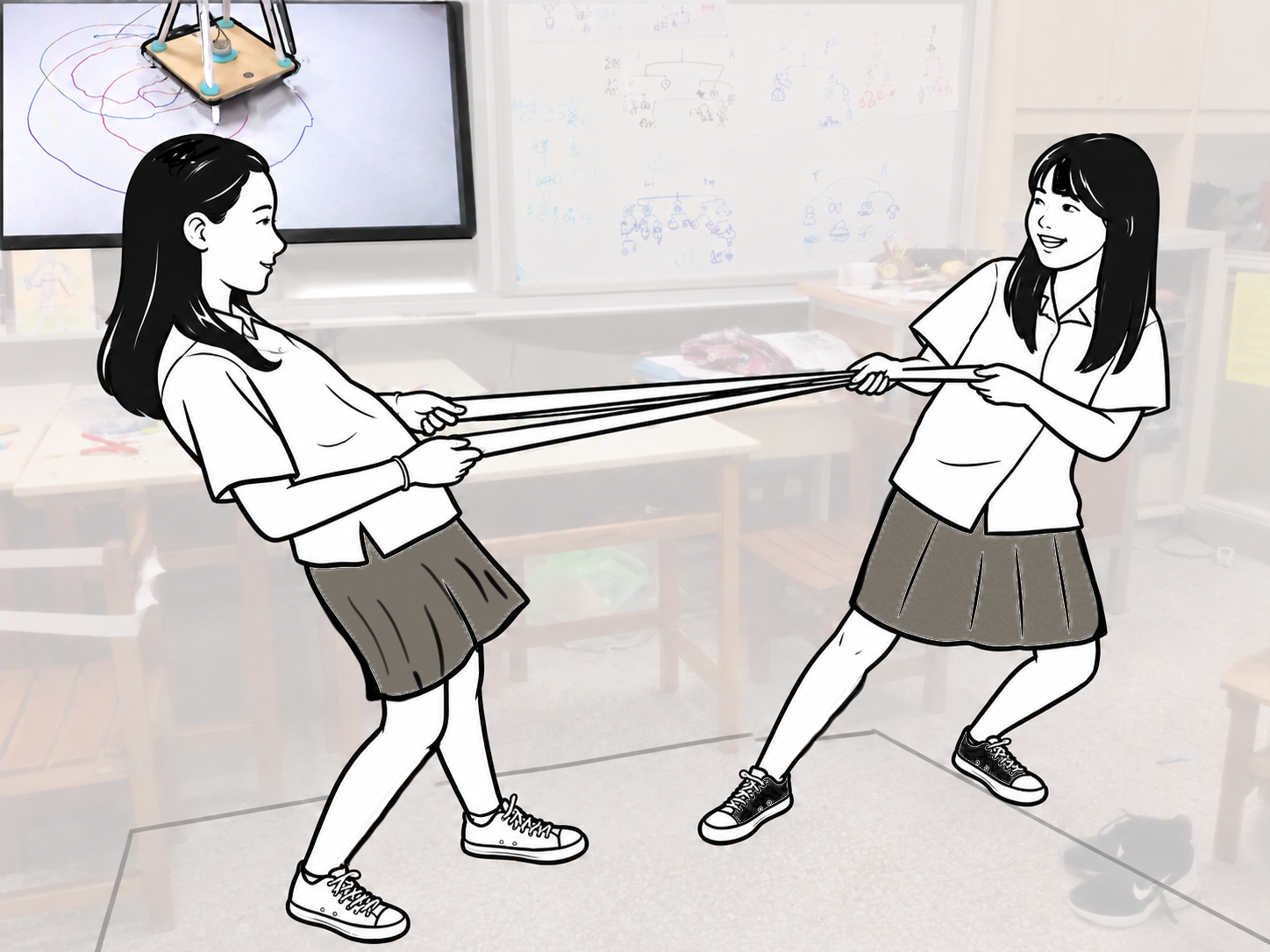
Note. Participants explore the relationship between bodily movement, force, and kinetic art through playful, performative interaction. The screen in the background shows an automatic drawing machine and the traces produced by its movements.
註。 參與者透過身體的拉扯與表演性互動,探索力量、動作與動力藝術之間的關係。後方螢幕呈現自動書寫器的運作過程,以及機械運動留下的繪畫軌跡。
