手作相機:光影中的觀看實驗
I designed and led this interdisciplinary course in collaboration with science teachers and professional practitioners, integrating optical physics, photography, and artistic experimentation. By transforming a classroom into a large-scale camera obscura, participants experienced how light travels and projects an inverted image of the outside world.
Through experiments with aluminium foil apertures, participants explored how pinhole size, light intensity, and projection distance influence image formation. They also constructed handmade cameras, connecting scientific observation with creative practice to explore the relationship between light, space, and visual perception.
這項跨領域課程由我設計並帶領,與自然科教師及專業實務工作者合作,結合光學原理、攝影技術與藝術實驗。透過將教室轉化為大型暗箱(Camera Obscura),讓參與者親身觀察光線的傳播,以及外部世界如何在室內形成倒立影像。課程透過鋁箔針孔、光線強度與投影距離的實驗,探索不同條件如何影響影像的清晰度與成像效果。參與者進一步製作手工相機,從科學觀察與實際創作中,探索光線、空間與視覺感知之間的關係。
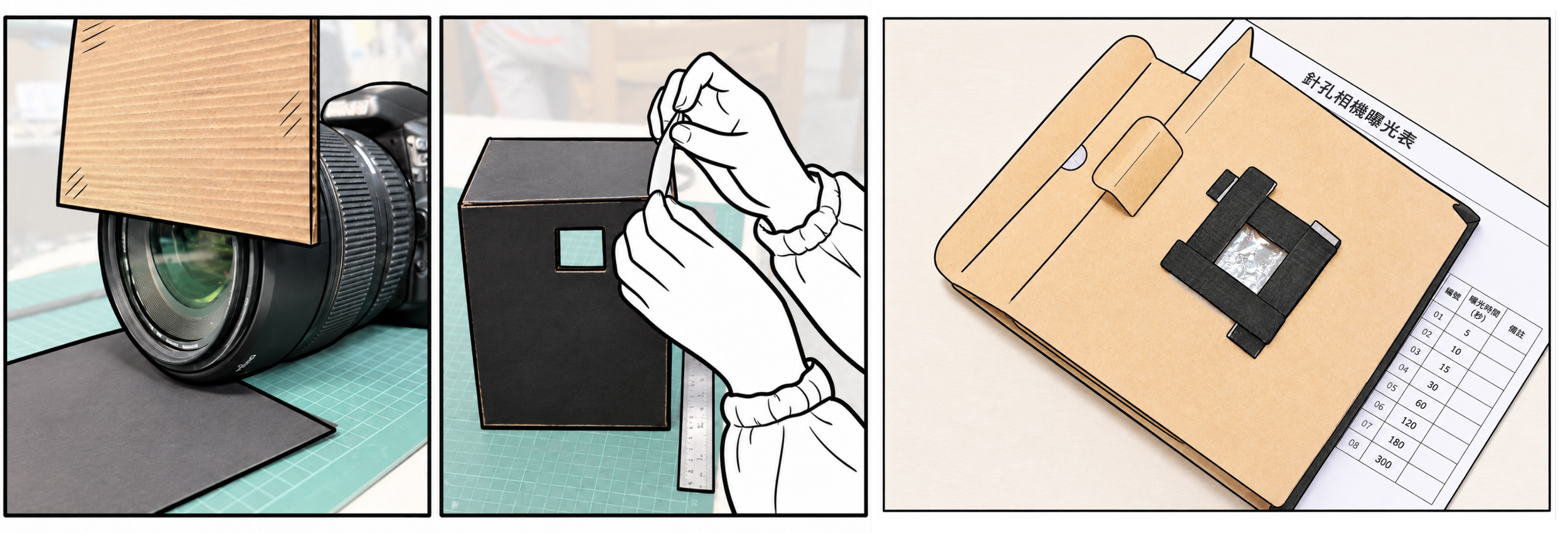
Note. The images illustrate the process of constructing a handmade pinhole camera. Left and centre: Participants used thick cardboard to construct a light-tight camera box. Right: After assembling the camera, they created a small pinhole in aluminium foil and prepared an exposure-time chart to experiment with photographic image-making.
註。 圖像呈現手作針孔相機的製作過程。左側與中間: 參與者運用厚紙板製作不透光的暗箱相機。右側: 完成相機盒後,在鋁箔紙上製作針孔,並搭配曝光時間紀錄表,探索光線與攝影成像的關係。
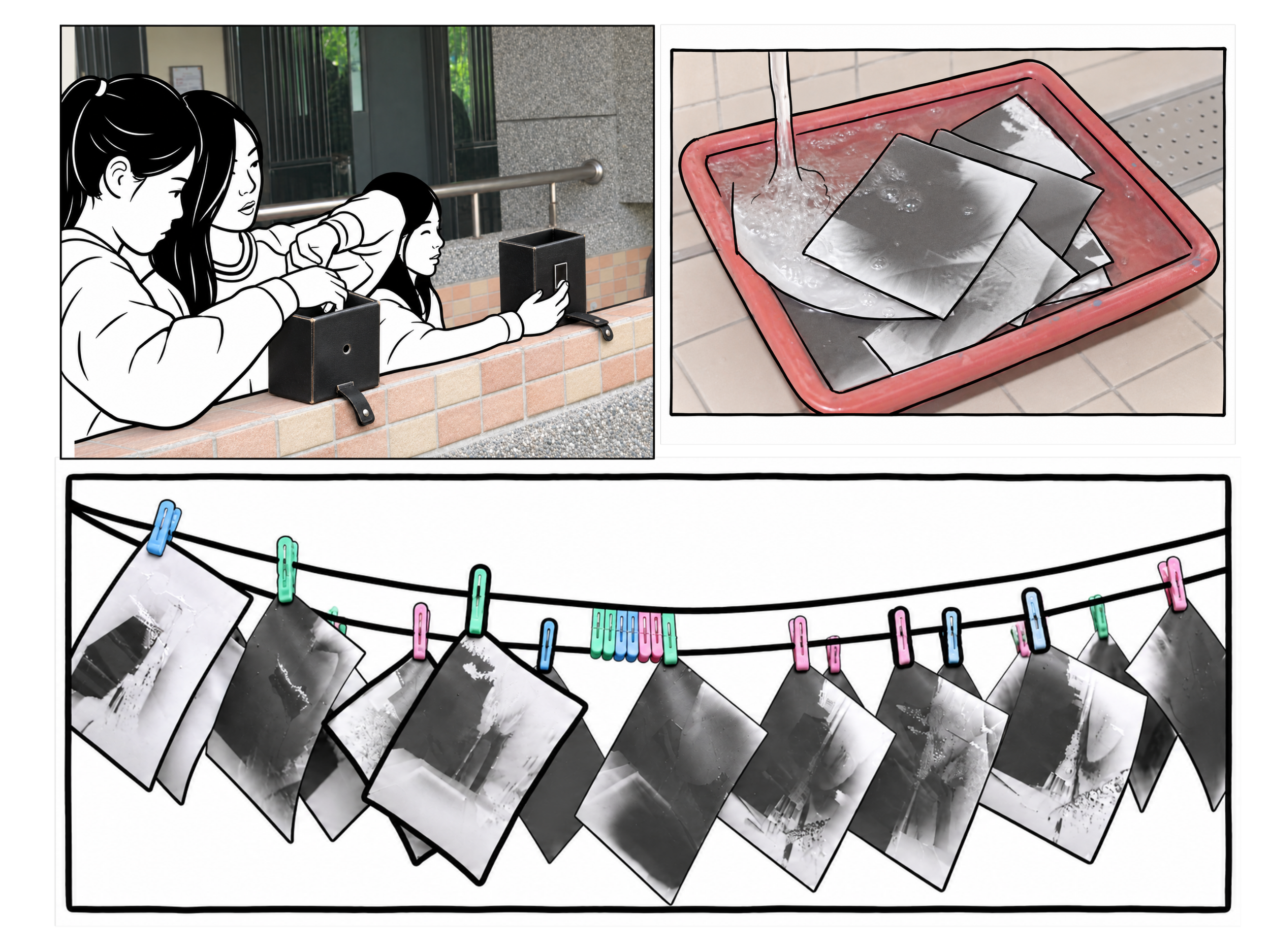
Note. The images illustrate the process of pinhole photography, from image capture to development. Top left: Participants explored different locations around the school, selected their shooting positions, and opened the camera shutter to expose photographic paper to light. Top right: The exposed photographic paper was developed and rinsed in the darkroom to reveal the images. Bottom: The finished photographs were hung to dry, completing the analogue photographic process.
註。 圖像呈現針孔攝影從拍攝到顯影的創作過程。左上: 參與者走訪校園不同角落,選定拍攝位置後,開啟暗箱快門,讓光線進入並使感光相紙曝光;右上: 將曝光後的相紙帶入暗房,透過顯影與沖洗呈現影像;下方: 將完成的攝影作品懸掛晾乾,呈現傳統攝影的完整製作歷程。
